
03/19/2026 0 Comments
Understanding Difference between Industrial & Commercial HVAC Systems
Difference between Industrial & Commercial HVAC Systems
Running a commercial property or an industrial facility puts heavy pressure on the heating and cooling system within, and each environment calls for a different level of performance. Commercial settings need a system that provides steady airflow and reliable temperature control for staff and customers. An industrial operation demands a lot more from its HVAC system, pushing the equipment harder for stronger output to keep production moving.
In this article, we’ll compare commercial HVAC systems to industrial configurations and break down all the differences in scale, purpose, and complexity to help you land on the right solution.
The Difference Between Industrial & Commercial HVAC Systems
Let's take a look at some clear distinctions between how commercial and industrial HVAC systems perform, how they’re built, and how much upkeep each requires. The HVAC system comparison below will help you plan your HVAC strategy and ensure it aligns with the scale of your facility.
Function and Use Cases
Whether it’s an office building, restaurant, or retail store, commercial HVAC systems are primarily designed for the comfort of people inside. They’re meant to provide stable temperature control, steady airflow, and balanced humidity across enclosed spaces that host regular foot traffic. Their job is to create a predictable indoor environment that keeps customers and staff comfortable throughout the day.
Industrial HVAC equipment is specifically engineered to support production-heavy settings such as plants, warehouses, and manufacturing lines. The system handles larger volumes of air, higher thermal loads, and conditions shaped by machinery that generate massive heat and airborne pollutants. It keeps operations running smoothly and supports processes that rely on stable thermal control.
System Scale and Performance Range
Commercial HVAC units handle moderate heating and cooling demands across segmented spaces like offices, classrooms, and boutique retail areas. They cycle based on occupancy patterns, business hours, and zone-specific usage to maintain comfort without pushing the equipment to its limits. Their performance range suits day-to-day activity in controlled, predictable environments.
Industrial HVAC systems operate at a far broader scale and sustain heavy loads for much longer periods. They treat expansive floor areas, elevated ceilings, and near-continuous equipment-generated heat. Systems may run around the clock to maintain strict process requirements, and their components deliver a much higher output range to match the intensity of mass production.
Design Complexity
Aside from their primary purpose, one of the biggest distinctions between commercial vs. industrial HVAC infrastructure is how they're designed. Commercial HVAC systems need to be flexible and scalable, so the architecture is typically engineered to be modular. They utilize packaged systems, split systems, rooftop units, and standardized components that simplify installation, expansion, and ongoing service. They prioritize ease of access, predictable airflow distribution, and zoning features that break a building into manageable climate areas.
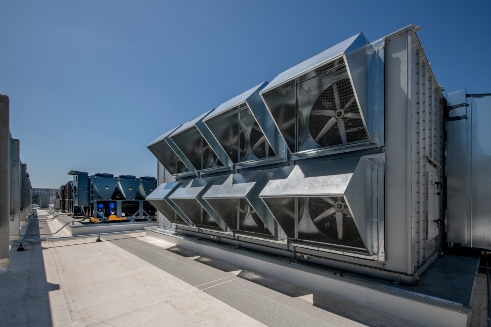
Industrial systems integrate specialized equipment like large-capacity chillers, high-efficiency boilers, cooling towers, and robust air handlers. The layout often incorporates custom ductwork, advanced filtration, and airflow conditions suited to heavy processing or sensitive product environments. They accommodate extreme temperatures, humidity variations, and airborne contaminants produced during manufacturing.
Energy Performance
Commercial HVAC systems use practical efficiency tools such as programmable controls, zoning, and smart, sensor-driven adjustments that respond to occupancy changes. These features reduce energy waste and help businesses manage their monthly utility costs without requiring high-output equipment.
Since industrial systems must balance the constant demand for larger energy loads, their efficiency relies on the advanced chillers, boilers, cooling towers, and heat recovery features we mentioned earlier. These larger components are meant to manage the amount of energy the system consumes as it stabilizes the larger-scale operations they’re designed for.
Maintenance Schedules
Commercial HVAC maintenance covers routine tasks such as filter replacements, inspections, and seasonal servicing. The scale remains manageable, and most components fall within standardized service procedures that keep equipment operating smoothly through normal business cycles.
Due to their size, scale, and demanding operational conditions, industrial HVAC systems require much more rigorous maintenance protocols that follow an ongoing schedule. Industrial systems need to be inspected and calibrated more frequently, and, because of their heavy, continuous use, system monitoring, component replacements, and emergency backup testing all become necessary to reduce the risk of downtime.
Hayes Mechanical – HVAC Expertise You Can Rely On
When you need HVAC experts who know how to keep your operation productive, our team here at Hayes Mechanical has over a century’s worth of experience in both commercial and industrial HVAC infrastructure. From ongoing maintenance and emergency repair to complete system installation, we will handle every aspect of your system with absolute precision.
Get the practical solutions you can count on to maintain the steady, predictable HVAC performance your business demands. Partner with professionals who deliver comprehensive service for all your HVAC needs – contact us today to learn more about how we can bolster your bottom line.
Comments